Showing posts with label history. Show all posts

Sunday, July 31, 2011

Mount Vernon Part 2


A handed down story at CW quotes a derisive guest as saying "You visit Colonial Williamsburg like you visit Disneyworld...once you're dragged by your parents, then you drag your kids, and then when you get older you can afford to stay in the hotels and eat at the nice restaurants." That sounds about right.

I have been to Mount Vernon before. When I was about ten, I think...this was in conjunction with a family visit to Washington DC, and Bush I was in office, so that would date it to about 1991. My clearest memories include standing in the HUGEOUS dining room, marvelling at the blue-green paint job, hearing about how Washington employed sheep to keep his lawn mowed, and standing in front of the Presidential tomb going "wait, he's in THERE?"

Well, I found out recently from an ex-employee that Washington never actually used sheep to mow the lawn--they used scythes and rollers to flatten the grass. But I wanted to see if other memories of Mount Vernon added up in my memory, so Jeff and I took a day trip up there yesterday. I fully expected the Mansion to be smaller that I remembered, which it was, but I was not prepared for the Ford Orientatio Center and the shiny new Donald W Reynolds Educational Center and Museum. Oh sure, I'd heard that such places had opened in 2006, and squeee'd expectantly up the drive, looking forward to seeing the waxworks of G-Dubs and original artefacts, but the actual centers were loud and shiny and a little, well, jarring.


Not lawn mowers.

We bought our tickets ($15), and headed into the Ford Orientation Center. Bronze statues of George, Martha and their kids greeted us. There was a 1/22nd replica of the Mansion, complete with lights, that opened and closed within a Plexiglass case, letting you peek in rooms. Then we were shuffled into a theater to view a movie about Washington's early career...but not before getting a five minute overview of the amenities available by none other than Pat Sajak. The Mansion! The Pioneer Farm! The Walking Trail! The Shops! The Boat Tour! The Hotel! The Civil War Tour! Children's Activities! The following movie was acted pretty well, but it didn't tell a coherent story. Washington was a hero when he was younger. Boom! He's retired to Mount Vernon. Whaa? Nothing about him being President? Oh, well, okay...I didn't need much background on our First President (did you know he started the French and Indian War? True!), but I kinda felt for the people around me.

Doors opposite the ones we had entered opened...no going back to see the statues some more...and we were walking up a brick path towards the mansion. Yup. Smaller than I remembered. But I didn't remember all the outbuildings. We made our way up to the Mansion via the South Lane, where the Greenhouse and slave quarters were, poking our heads in the door. As did everyone else who was there. That was when I noticed the hordes of people. For real noticed them. Especially the kids, who were running from exhibit to exhibit...while I was trying to read "stationary interpretative signage" they would dart in front of me, frown because the sign was not a stop on their "History Hunt" maps, and then dart off again, bawling that they needed to "find number 4." I am all for taking kids to historic sites--probably would not be going to them now if I hadn't been taken when I was younger--but these families seemed to be there because it was a line on their Washington DC tourbooks, not because they had any true history geek or squee factor. Personally, I don't know how I would prepare an eight year old for the seriousness and gravity of visiting the Home of the Father of Our Country, so hats off to this family, who not only clearly absorbed Mt. Vernon and the outlying farms, but documented it in a series of photos--MUCH better photos that I could have taken yesterday.

Another reason we had gone to Mount Vernon was so I could do some research for a play I'm writing about Washington's slave, Billy Lee. I wanted to walk around the grounds and get a spatial feel for the place, to see how far it was from the house to the slave quarters, etc, what kind of life house slaves would lead. I was prepared for not a lot of information about Washington's slaves--it is after all, Washington's house, and the Mount Vernon folks are in the business of continuing the deification process--but I was disappointed with how little info there was. The displays in the slave quarters were static, and there was no mention at all in the house tour.

Our house tour started at 2:45..well, that's the time we could get in line. Stood in line for about ten minutes before we were directed into the servant's house. Then we went into the main house, into the dining room...just as green as I remembered. Gorgeous color. The man in there talked for five minutes at random about the paintings, the original marble fireplace, one historical moment (when Washington found out he was president "right HERE!"), and then shoehorned us out the opposite door. As we were being herded out, I asked the guide if the paintings had been in the house when the Ladies Association had bought it. "No," he shouted, going back to the door we had come in and letting in the new group "they were hunted down and repurchased later." We stood on the back porch, looking out at the Potomac. "The Ladies Association also bought the land across the river," I told Jeff, something I remembered from the last time I was here, "so the view is the same as when Washington lived here. Except for the motor boats, obviously." We admired the view and then shuffled forward into the foyer. Four rooms led off of this hallway. Jeff and I admired the faux painting in the hallway, the key to the Bastille in it's glass case, I asked another question, glanced in the four rooms, and then went upstairs...where the next guide was already finishing her spiel about the bedrooms. More faux painting (Unlike other Virginians, Washington believed in paying for what he owned, so there is a LOT of faux finishing in this house, instead of actual marble, wood, etc.), and another quick glance at the bedrooms, then we were in the hallway leading into the room where Washington died. I made the mistake of asking the guide stationed there where Billy Lee would have slept. ("Frank Lee?" "No, that was his brother. Billy--" "Oh, right. I don't know.") Looking briefly into Washington's room, we made our way downstairs and into his study. I remembered this room, with all the natural specimens and the fan chair. At this point, I had given up on questioning the docents, and settled for admiring the inset wall cabinets. Then we were outside. That was it. Twenty minutes, five guides, and I had three questions sort of answered and felt like I had been on a conveyor belt.

So, okay. The visitor count that day had to have been in the thousands. Good on Mount Vernon drumming up the numbers. I'm sure that others who went through were perfectly content with their tour...the average person can only stand listening to someone prattle on about antiques for so long, after all. But I have a higher tolerance for prattling, and a better grasp of the historicity of Mount Vernon, and I would have liked to have spent a little more time speaking more with people who have their boots on the ground so to speak.

We wandered through the kitchen in a desultory way, then down past the stables and further down the path to Washington's tomb. More kids. The tomb itself, like the house, was smaller than I remembered. I stood there, thinking about visiting this same grave twenty years ago, when a little girl marched up to the gate in front of me, announced to seemingly no one "That is a very small room!" and then turned on her heel and marched off. I prevented myself from saying "Honey, that's all the space any of us will need in the end." We walked up to the slave memorial. It was much quieter and more sacred there. More trees, birds...Billy Lee is buried there somewhere. I wished I would have brought flowers. It's the least I could do since I'm quietly dramatizing and dismantling his life. But we just looked and walked on.

Down a brick path to where the boat launch was. Friends, if I'd have known there was a boat tour, we would have been on it. That was new. As it was, we got there too late to make the last tour. By this point, after the heat of the day and the oppression of hundreds of our fellow humans, we were not really in any shape to make the haul back up to the Mansion. We opted instead for a bus shuttle back to the Museum.
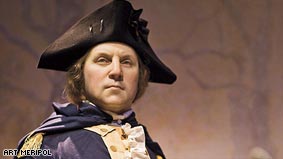

Not actually Washington, but an extremely lifelike waxwork! Who sees what you're doing there!

I was ready for the Museum. Part Smithsonian, part multi-visual, mega remix experience, I was looking forward to seeing WASHINGTON! THE MAN! THE HERO! Reinterpreted by the best that museum designers had to offer. There were waxworks ("death's head buttons? on a working man's coat? really?), cartoons about his young life ("the cherry tree is a LIE!"), and reproductions of artifacts that we were invited to touch (yay!). And there were kids. Hordes of kids. Running around, shouting, touching things, setting off alarms. One girl was taking so many pictures I feared the flash would trigger a seizure. I finally said "hon, you're not supposed to take pictures in here." "Oh. How come?" "Because it will fade everything." This seemed to stop her until she figured out how to turn off the flash feature. Whatever. Another little girl had a meltdown at the Presidential Swearing In Exhibit, slapping the Bible and screaming "this is STUPID! STUPID!" and totally getting in my way of examining the Presidential Swearing In Suit. There was a shrine to Washington's dentures, as well as a video of how there were made. (one word: ow. Also: ew.) There was an excellent exhibit and retrospective video about the enslaved population at Mount Vernon, which I watched in full. But, by that point, the day was over. We were tired and huuungry. After a cursory turn through the giftshop (where I bought the Mansion guidebook, hoping to pick up on some details that weren't covered on our tour), we took off.

We had dinner at a local pub, picked up Kiz from daycare and headed back home. Being able to spend all day with Jeff was lovely, as was getting away from the house. And I did accomplish goal one--that of studying the layout of Mount Vernon, of visiting where it happened and starting to see the elephant from the enslaved people's point of view. But I didn't get much out of the house tour. I should have thought before we went--July is high season after all. I'd go back--I'd definitely recommend others to go--but go in the off season. That's what off-seasons are for, after all. And, if you really want to get up close and personal with some of Washington's dentures, check out the Royal Hospital in London...just watch for opening doors.

Sunday, June 05, 2011

Sarah Palin, Historian

Recently, Sarah Palin has been on a bus tour, to...well, no one is exactly sure what she's doing, but she has a bus and a film crew, and hey, who wouldn't stop at some American historical sites if they had that? Here's a video of what she was doing in Boston

I'm sure most of my loyal readers have seen this video...basically Mrs. Palin tells how Paul Revere "warned the British" by "ringing bells" because they were coming to "take our arms." In her defence, the British WERE coming to steal weapons and powder at Concorde, but Revere was warning the American rebels. My beef is not with Sarah Palin's idiocy. My beef is with her appropriating American history in the cause of...whatever it is she's up to. (Running for president? Running for a seat in the Senate? Trying to get her job back at Fox? Keeping her name in the news?) As a patriotic American, I sorta resent Sarah Palin for co-opting 'merican history, and trying to use it in the name of Freedom, Values and the American Way.

Notice how in the previous paragraph I referred to the American patriots as American rebels. That's because, in 1775, they were rebels. They were freakin' terrorists. But gradually, as history has been written by the winners, they were transformed into Patriots, who, apparently, are direct descendants to the...Tea Party. I am much more comfortable with the murkier idea of rebels turning themselves into the Establishment...my brain is comfortable with the idea of governments permuting over time...it gives me hope that it can change again in future. The Founding of America was not a foregone conclusion. The Founding Fathers were men, same as us, who disagreed, a lot. And the country they spawned contains Tea Partiers and protestors, patriots and patriots.

Further proof of this co-opting and whitewashing of early American history can be found in a recent (ish) story about a woman dancing at the Jefferson Memorial. In 2008 a group of friends gathered at the Jefferson Monument to celebrate his 265 birthday by dancing, wearing headphones and listening to iPods. Sort of like a flash mob. But one of the women was arrested, and after she sued, the DC court ruled that dancing at monuments was illegal. National monuments are a place for contemplation and reflection...not dancing. Naturally, some people felt this was an infringement of their rights ("our monuments, our respect?"), so they protested, and more people were arrested. Article and video here. The idea of dancing at a monument (especially a monument to an anti-big government, freedom lovin' founding father!) has not lost momentum: most recently a group of people danced again in May 2011. This time, police showed up but arrested no one. (I especially like the part of this article where the former Marine pulls out the Constitution and says "I got yer permission right here!")

No one is suggesting we Macarena at the Vietnam Wall, or Charleston at the USS Arizona. But a little perspective on how we honor our history would be appreciated. Some people view our Founding Fathers as saints...me, personally? I get a little tickled when I think about how TJ had time to write the Declaration of Independence, be ambassador to France, get elected President and then start the University of VA...all while being a bad-ass violin player. Huzzay!

Monday, May 30, 2011

Memorial Day


One thing I learned when I moved to Virginia is that I know nothing about the Civil War. Everything I learned about it at school was either completely Union-centric or wholly inadequate. Luckily, I live in Virginia, so I am learning heaps. And not only that, I live on a battlefield--well, near to one, anyway. There may have been skirmishes where our house is, definitely gunboats heading up the James to batter Fort Boykin, which is about a mile and a half away from here, part of Magruder's line of defences across the Peninsula. You can't take two steps in this state without tripping across a historical monument.

Memorial Day was started by Confederate ladies decorating the graves of their dead. Gradually, of course, it spread to encompass all servicemen and -women who gave their lives for this country. It is a day to reflect and remember those who gave all so that we can enjoy the freedoms we do. Yesterday I was walking into the grocery store when I saw a woman standing by the door wearing a pair of red, white and blue pinwheels sticking up from a headband, red white and blue beads--and I felt momentarily embarrassed, like I do whenever I see someone paint themselves up in patriotic colours and dance around screaming "USA! USA! HELL YEAH!" Yes, the USA is pretty awesome--but I prefer a more dignified approach, remembering that other people feel their countries are pretty awesome as well, and that may cause friction. Anyway, I soon realised this woman was collecting money for the American Legion, and I dropped a dollar into the coffee can she had decorated with patriotic fabric. She gave me a poppy, and I put it on my purse. Poppies come from World War I...it's amazing how history can roll along, symbols and days all melding together until we do things without exactly remembering why or where the initial movement came from. Yesterday at church we honored our veterans by having them stand while three little girls sang a song called "Thank you, Soldiers." But it's memorial day...

There was also a letter to the editor yesterday from a man who wanted the US government to honor fallen Confederate soldiers by placing Confederate flags on their graves. After all, that is the cause they died for. It is an interesting plea. Graveyards containing Confederates that are private or in the hands of local townships are usually honored in this way. But graveyards that are on Federal lands--i.e. graveyards where Union soldiers and Confederate soldiers were buried side by side and were then taken over as federal land by the US government--receive no such treatment. Everyone gets a Stars and Stripes. I can understand how awkward it would be honoring people who were, after all, rebelling against their government by putting a traitorous flag in a United States graveyard...but then again, Confederates soldiers might prefer to just have flags left off all together if the only option is a US flag.

What's in a flag anyway? Should we honor our 1812 soldier by having a US flag that accurately reflects the number of states at that time? Or is the point not the politics but the remembering--taking time out to say thank you and we remember? In Williamsburg there is a small cemetery containing French soldiers who died in 1781...part of Williamsburg's memorial day service includes laying a wreath at their graves, but no flags. A French flag would be appropriate, and less likely to rankle than a Confederate flag--but wait, these soldiers fought for the French king, and so a Bourbon flag would be used. Yet the Republican French government that sprang up shortly after our Revolution would have looked upon that as traitorous, and so it goes.

(by the way--one of the things I've learned is that the flag we think of as the "Confederate" flag was not as prevalent as we modern folk think. Yes, it existed, yes, it was carried into battle, and yes the South did use it as a symbol of oppression, but that was largely in the 20th century...the the Confederates fought under the three National flags...so the most appropriate flag would be the third National)

I don't even know if I have a point today, except I've been thinking about Memorial Day. Personally, I believe that an appropriate flag to decorate the graves of fallen soldiers might be their battalion flag--after all, many vets have said that what they were fighting for was the person next to them. It's not always easy to tell what battalion a fallen soldier has come from, however. And maybe, in the end, that's why it's just simpler to stick to one flag--our flag, the modern Stars and Stripes: "We remember. We may have changed as a country, but we remember your sacrifice. Thank you."

Thursday, May 26, 2011

Wake up, wake up darling Corey...

So I like bluegrass music. Yeah, I know, I know--there was a time when dad would put his Merle Haggard CD on and I would roll over and howl in protest but now...I like bluegrass music. Jeff and I even took a trip in January to West Virginia specifically so I could listen to some live bluegrass in the place where it was born. And I spent a pile of money on CDs featuring original bluegrass. My iPod has died (proper, dig a hole in the ground died), so I've been listening to these CDs lately, and even learning a few of the songs. Without a doubt, one of my favourites has turned out to be "Darlin' Corey" which is about a moonshine makin', gun totin', banjo pickin' West Virginny woman. Who dies. Why or how or when is never fully explored, but there are highway robbers running around, and yet people take time out to bury her, so I have no clue what's going on. I just like the intervals.

The folks who settled the Blue Ridge mountains mostly came from Ireland and Scotland in the 1700s...remember the whole "hey, stop settling in our territory, whitey, or we'll start a war" thing with the Indians? Yeah--it was the Irish and Scots who were pushing west past the Alleghenies. Mostly because the English settled along the coast didn't want that riff-raff in their neighborhood. And if you listen to bluegrass, you can definitely hear the echoes of eighteenth century songs. Especially the part where people get jealous and kill one another and then are on the scaffold prayin' for to go to heaven.

I tried to find a good video for Darlin' Corey, but YouTube only has tutorial videos or crappy live recordings of bands that are probably much better in person. Just YouTube "Doc Watson" or "Earl Scruggs" and spend an hour or two.

And while you're there, check out the other reason I'm not doing dishes tonight: A BBC production called "Horrible Histories." Slightly irreverant historical vignettes for kids that don't talk down to them...although I'm sure you can appreciate Roman toilets more when you're a ten year old. Still--Charles II alone is worth the price of admission:


All together now "ALL HAIL. THE KING. OF BLING."

Monday, March 22, 2010

Conversations with Kismet, pt 14

ME: Would you like a rawhide chewstick?

KISMET: YES! I LOVE RAWHIDE CHEWSTICKS!

ME: Ok, here you go!

KISMET: YES YES YES, OH BOY HOWDY.

ME: I better not find that buried in my pillow later.

KISMET: No'm.

ME: Hey, where are you going?

KISMET: Nowhere.

ME: You went in my bedroom to bury that in my pillow, didn't you?

KISMET: ... No.

But, in his defence, he did go dig it up later and eat it.

The CDC has been offering a series of workshops as part of the continuing celebration of our 75th anniversary, and last Saturday I got to host one on Pockets, Workbags and Market Wallets. It was a lot of work, doing research on the items I was going to talk about and getting all the materials ready, but in the end it was a lot of fun. The pockets were the most in depth part--more of them survive and they have a longer history and are better documented, but workbags were also interesting, meant to be heavily decorated and showed off. Market wallets are the plastic bag of the eighteenth century...everyone used them, but no one thought to save one or write about it. I even got to go into collections and take pictures of the pockets and workbags the had there. A huge room full of drawers and shelves, holding centuries worth of clothing, textiles and other fabric-related bric a brac. Drooooool.

(Here are some pictures...but please don't tell collections I posted them. They will find me.)


Flamework wallets. One of the volunteers opened this drawer, looking for more pockets, said "oh, you're not interested in this" and I quickly snapped a pic before she shut it again. Oh, the colours! Hard to imagine they're so bright after two hundred years.


Embroidered pocket. Notice the asymmetry. Pockets were one of a kind and individual.


Housewifes. Again, another drawer I "wasn't interested in." The one on the right is actually made out of a thin leather. The ones on the left have tiny mirrors in them. Why, I don't know, but they were gorgeous. Oh, I tell you I could have spent hours in there.

But, I'm glad it's over. Now I can focus on working on my play and the evening programs. And walking Kismet. And giving him baths when he attempts to dig to China.

Monday, February 22, 2010

New Article

Hello everyone...here's a link to my latest article for Examiner.com...it's an interview I did with Bill Chrystal, who will be interpreting John Adams this weekend at the Suffolk Center for Cultural Arts. Enjoy!

"Bill Chrystal: An interview with John Adams of "An Evening with John and Abigail Adams."

Sunday, February 14, 2010

Blogging from DC

Hello loyal readers. Well, I've made it to Washington DC successfully, even after the Snowmageddon. The streets and sidewalks are mostly clear, but there are huge piles of snow on every street corner. To cross the street, one must stick to the little rat runs--packed down paths of snow a pedestrian wide that cut through these snow piles. This makes it easier and harder to walk around--there is no jaywalking, but on the other hand, the cars are strictly restricted to the open lanes, so you know exactly where they're coming from.

I met my friend Alison here, she came down from New York. We're staying at a Radisson near the airport...it is a business oriented hotel, but very nice. Yesterday we spent all day indoors at the Smithsonian--first at the Natural History Museum, then at the American History Museum.

The Natural History Museum was for Alison, who likes dinosaurs. So we waded through all of the children (no doubt made even more crazy by a week's prison sentence) and admired the all the skeletons, sniggered at the dioramas dating from the sixties, and I learned that a brontosaurus was actually a made up animal. The Natural History Museum also had a traveling exhibit called "Written in Bones" which featured forensic science applied to skeletons dug up around the Chesapeake Bay area including--surprize!--Jamestowne. I'm sure Alison appreciated all my whispered asides during the introductory film on how accurate or not all the costumes were.

Then we went out to lunch at the Elephant and the Castle, a British-themed restaurant that wants to be a pub. It succeeds...sort of. Does it have British beer and fish 'n' chips? Sure. But the basketball on the television and the lack of brown sauce on the tables was sort of a downer. Cider was good though.

In the afternoon we visited the American History Museum, which re-opened in 2009 after some extensive remodeling. I'm not entirely sure it's done being remodeled actually, some of the exhibits were incredibly small for the amount of attention they got. Putting Kermit AND the ruby slippers in the same room for example--is that really how it's going to end up? I'm sure not. I was fortunate enough to see one of Martha Washington's day gowns, where I helpfully corrected another visitor's erroneous assumption upon seeing Abigail Adam's dancing shoes: "No, American women never bound their feet...she actually did have feet that small, she was probably only five foot two to five foot five." arg. I also got to see George Washington's uniform. Stepping close to examine the buttonholes, I came to within a foot of his breeches flap, steaming up the glass that separated us. *history geek shiver*

Afterward, still full from our British lunch, we stopped for tea, then headed over to Ford's Theater, where we took in "The Rivals," a show written in 1958, using the transcripts from the Lincoln/Douglas debates, which had happened a hundred years before. It was a fantastic show--if Abraham Lincoln was really as friendly as the man onstage last night, I think I would have liked him. It was also a little eerie. We got the $12 restricted view seats, which happened to be in the balcony, right across from the box where President Lincoln was shot. At the end of the show, as a recording of Lincoln's plea for unity and common sense played, they brought the lights up in the box. It was just about 10:30, right when Booth had shot Lincoln, leapt the twelve feet down to stage (no wonder he broke his leg) and made his escape. Almost saw the elephant then, only the cluster of source-fours prevented total immersion.

Then home. We stopped for Chinese food and took it up to our room...and now Alison isn't feeling well. Too much walking, not enough humidity in the air, Chinese food at eleven pm, she is happy to stay in bed and sip on ginger ale. I'm heading back out, possibly back to the Written in the Bones exhibit. Although I don't begrudge a day in. At least we have HBO--and I don't have to head out into the wind to take Kizzy for a walk every fifteen minutes. And isn't that was vacation is really all about? Really?

Sunday, January 10, 2010

Dating the Fork Fantastic

This is why I love doing historical re-enacting. Every now and then you run across an actual artifact that's of the period, but is still in good enough shape that you can continue to use it for its original purpose. Case in point: my fork. Forks--well, eating utensils--were carried by soldiers or sailors, in lower-class households, every person might have had one that were taken care of and kept track of. No taking a real fork to work and then losing it in the utensil drawer because you've got more at home. Every reenactor needs their own utensils. When you go to an event and someone offers you a piece of chicken, you whip out your plate and dive in with your own knife and fork.

So I bought a fork. I found one (okay, Jeff pointed it out to me) at the local Antique Mall, a big, barnlike structure where individual merchants rent cases and you can spend hours wandering around fondling everything from vintage prints to vintage clothes. There were five forks, originally, pewter, with three tines, the initials I.C.R. stamped in the handle. For $25, with a twenty-five percent Christmas markdown, a piece of history could be mine! So I bought one.

This is what my fork looks like:


(Can I just interrupt myself here to say again how truly awesome this computer is? I was bemoaning the fact I'd have to get out my camera and cables and dig up some rechargeable batteries when I remembered that my computer has a camera on it! So now y'all get to see my fork AND what I look like in my pjs!)

Jeff and I were slightly disappointed to discover (once we got the fork out of the case) that the fork had "JAMAICA" stamped on the back...clearly this eighteenth century fork had been exported in the twentieth century. But it was still a good investment...$25. We figured it was from ca 1715-1760, so definitely something that a lower class person could have used in the Revolutionary War.

BUT THEN THE PLOT THICKENED...

Remember the Real Pirates exhibit I went to last weekend? (Yeah, I'd hyperlink it, but all you have to do is scroll down) Among the artifacts that were recovered from the pirate ship Whydah was...wait for it...A FORK. Which looks like this:


Look familiar? Yeah, I thought so too. The Whydah went down in 1717, which gives me definite cause to think that my fork was made before 1717...so Jeff and I did some more research and came up with another shipwreck. This one was the Belle, and it was recovered off the coast of Texas. One of the things the dive team pulled up was a chest of mysteries--here's an interesting article about it--and one of the things in the chest was...guess now!...a FORK.

Belle's fork looks like this (you have to click on this one, it won't let me put a photo on here)

Notice how this one is even more similar to my fork. Three tines in a squared off setting. The three scrolls on the handle. But the crazy part about this? Belle went down in 1686. That puts the "circa" dates for my fork anywhere from the late seventeenth to the early eighteenth centuries.

So with those dates, and the modern export mark "JAMAICA" I am seriously thinking this fork may have come from the ruin of Port Royal, Jamaica, which sank under the waves during a tremendous earthquake in 1692. Whether it's a recovered artifact from an archaeological dig or something that someone finally dug out of grandma's attic, there's no doubt that it's a genuine piece of history...

That is at least THREE HUNDRED YEARS OLD!!!!

I am planning on harassing some of the archaeologists at CW about possibly working out the maker's mark on the back (I can't read it, it's too faint), or at least definitively telling me if I'm on the right track. Either way, it's a very special fork...one I still plan on taking re-enacting with me, although not until I make it a safe little pouch to hide in my pocket in.

Tuesday, October 20, 2009

It's not Wellington

My budget is going to hell this week because I WANT THIS T-SHIRT.


want want want want

Thursday, September 17, 2009

which it will be READY when its READY

Friends, I am in the throes--the throes, I tell you--of a serious Patrick O'Brian infatuation. The last month or so I have been doing nothing but reading, sleeping, thinking and dreaming Aubrey/Maturin. And now, thanks to the book "Lobscouse & Spotted Dog" I will soon be eating and drinking it as well. I am so obsessed with these books I've even picked up steward Killick's habit of inserting the word "which" at the beginning of sentences. One of my favourite things about these books are the loving descriptions of the food. But there are no receipts, a glaring omission that "Lobscouse" rectifies.

I checked the book out from the library today just to get a flavor of it (flavor, you twig? har!)--far easier to follow than my Wmsbrg Cookery, with its oven settings and measurements in modern cups and tablespoons--but with a lot of the original nineteenth century sources cited. Wistful thinking about cooking on a spit over an open hearth became wistful no more when I looked up and saw our brick fireplace--with a lovely large hearth just begging to be roasted upon. And I can think of no better delicacy to bring home to this year's Christmas feast than a Christmas pudding...although if I was to do it absolutely correctly, I should start it now and let it hang unmolested in the corner for the next three months. And then light it on fire. Wheee.

I don't know why all of a sudden I'm so obsessed with historical cooking (why I'm obsessed with Aubrey/Maturin is perfectly obvious) except I think it's something to do with the hearty, historical way receipts are put together. Lard, flour, eggs, suet, all combining to create something glorious. The tastes aren't as rich or as subtle, but they're easier to appreciate. You put rosewater in custard and by God, it tastes as rosy as a spring morning. I'm looking forward to mastering pudding...not only because as an Anglophile it's a duty, but because apparently it's Patrick O'Brian's favourite dessert.

Wednesday, July 08, 2009

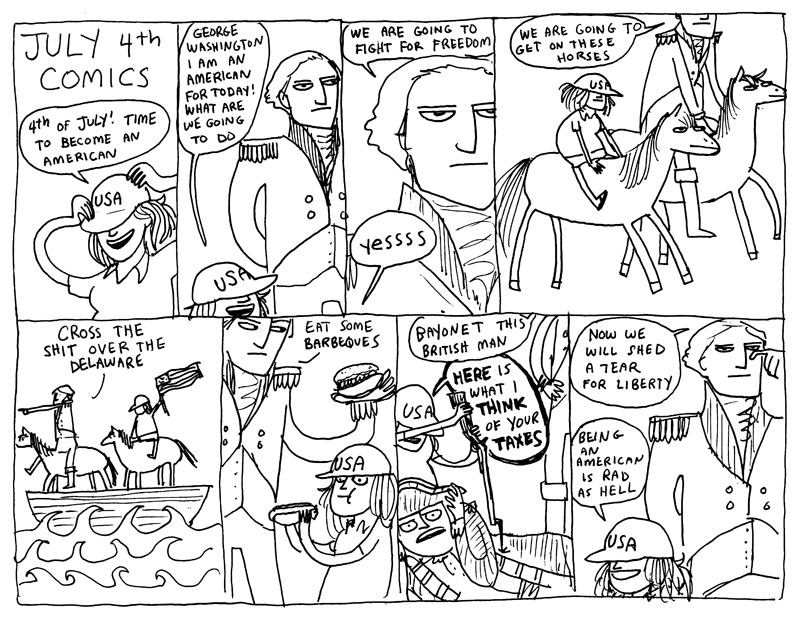
being american is rad as hell


The reason I don't post often is because I am working nights. Also, I spend a lot of time at my boyfriend's place, and he doesn't have the internets. Also, part two, I sit in front of a sewing machine all day instead of a computer, so I really, really don't get much time for checking emails and updating my blog.

This last Saturday I was back at CW, participating in the military programs for the Fourth. How far we've come in a year! Last year I could barely march and wasn't cleared on a musket, this year I was tossing a Brown Bess around with aplomb and muttering under my breath at people who couldn't stay in step.

Things are going well here. I'm tired, and I'm looking forward to going home in a week, to visit with my family. My grandma is not feeling her usual perky self, so I'm anxious to visit her--although she manages to mention everytime I call how adorable Lily is. I guess I have a little competition for favourite grandchild now...

Friday, July 03, 2009

The book I want to write starts like this:

"When people find out I work at Colonial Williamsburg, the first question they inevitably ask me is, do I get to work in costume? Usually they're disappointed when they find I'm actually behind the scenes, although they perk up again slightly when I tell them I get to make the costumes. I leave out the boring bits about hemming and buttons.

A couple times a week, however, I do get to work in costume. I throw on a lovely green linen gown and petticoat and go haunt the Randolph house, a storyteller for the ghost tours. One night I was standing in the doorway of the passage, enjoying a freshening breeze, when I noticed a guest (always 'guest,' never 'tourist') standing by the fence, looking at me with the "I have a question but I'm shy" face that any interpreter can spot a mile away. "Good evening!" I said, hands on hips, full of my eighteenth-century persona. "Hello," the woman said timidly, "Are you Eve?" "Oh, no," I cheerfully replied, happy to get some practise in as a first-person interpreter, "My name is Mrs. Peachy. This is my home. I live here with my husband and my young son." Then, my well of information about Mrs. Peach exhausted, I dropped the first-person act and came down the steps toward the woman. As I approached I saw that she was wearing a Teacher's Institute nametag, with her name and her hometown on it. Then, underneath that, another word: "Eve." And I instantly realised that this year the teacher's institute--an intensive weeklong historical immersion for teachers who are hoping to add a little pizazz to their social studies classes--must have assigned each person a historical figure to learn about. All this woman had was a name to go on. She had found herself the right house, all right, but had no clue who Eve was.

I walked up to the fence. "Eve was a slave," I explained. "She was owned by Mr. and Mrs. Randolph...after Peyton died, Eve and her son ran away and tried to join the British side, but they were captured and brought back. Eve was eventually sold." I am trying to be gentle, but I can see the teacher in front of me--a woman not much taller than me, middle-aged, wearing a white shirt under a fanny pack with sensible New Balance sneakers--is startled to find out that "her" person was actually an enslaved woman. "Was she--was she brought back by force?" she asks me.

The truth is, I don't know. In the ghost story I tell, Eve is "retaken." But I didn't write the script and I know that artistic licenses have been taken. "It's possible," I say slowly. "It's also possible that she returned under her own power, because her family was here, or she was unable to care for herself and her son, or the British kicked her out of their camp when they moved to Yorktown." Bits of historical fauna float to the surface of my brain, fascinating details about Americana I've tucked away. "Either way, Mrs. Randolph found it necessary to sell her because of her 'bad behavior' (this much I do know, I've read Betty Randolph's will, where she directs the executors to take the profits from Eve's sale and buy a slave for her niece, since the niece won't be inheriting Eve now.) so I guess we can assume that there was some bad blood there."

I am trying to be helpful, and I suggest to the woman that she really needs to come back during the day, when the Randolph House serves as an interpretive site for the African American programs. "The interpreters here would know a lot more than I would. I'm just the ghost." I can see though, that this friendly Kentuckian teacher is a little shook up. And who wouldn't be? You go on a treasure-hunt for the person on your nametag, and you end up confronting a dark, dirty secret of America's past.

This episode stuck with me because in some ways, I find myself performing the same task. My background is in theatre, in playwrighting, specifically, and for a long while now I have wanted to write a play about William Lee, George Washington's manservant. Slave, bought and owned by Washington until he died, but also one of the people closest to the Father of Our Country. Three steps behind Washington during his entire life and what do I know about him? Nothing. But for some reason--there's a play there, and I want to dig it out.

For all intents and purposes, I should be the last person who's interested in a play about Billy Lee. I am white. I am female. I am a Yankee--or at least, not from the South, which is how Southerners define "Yankee" although those of us from Wisconsin would probably check "other" on the great census sheet of union-vs.-confederacy. A rabid Anglophile, I can rattle off the British monarchy from Henry VIII all the way up to present day, but I peter out on American presidents somewhere around James Madison. To me, living in Virginia is almost like living in a foreign country with a history and a culture that should be learned and studied and appreciated.

This either makes me ideally suited for the task at hand, or in way, way over my head."

Monday, February 02, 2009

victory!!!

Oh man. Have you heard about this? Apparently an American company, Odyssey Marine Exploration, has discovered the wreck of the HMS Victory--not Nelson's Victory, which is currently dry docked at Portsmouth--but it's predecessor, which was laid down in 1737 and sank in a storm in 1744. Heh, I said "laid down" like I knew what I was talking about.

Apparently they haven't brought any artifacts to the surface other than a pair of cannons, but there are rumors that there might be up to a billion dollars worth of gold coins down there. The British government technically has jurisdiction, since it is a military wreck, but I'm more interested in what else might be down there, anyway. Just think of all the artifacts that survived from the Mary Rose wreck--and that was in 1545!

It's just so damme exciting! I mean, I love ships, and a sunken ship like this is just like a big time capsule. There is no telling what might be down there. I hope that they're able to bring up lots of things, and maybe even raise the hulk in the future. According to the BBC website, there will be a Discovery channel documentary airing on the eighth...I'm going to try to catch it. Oh, it's exciting. I've been humming "Hearts of Oak" all day.

Sunday, January 25, 2009

Road to Monticello

Part of the reason I've been trying to get my Tomtom to work is because we were going to Monticello on Saturday. Monticello is, of course, Thomas Jefferson's plantation home, over 600 acres near Charlottesville. The main house, famously built and remodeled over fifty years, sits high on a mountain, surrounded by the ranges of the Blue Ridge Mountains. We drove for about two hours west to get there, arriving about eleven-thirty. The sky was grey, and the grounds were fairly quiet. I figured it was just the off-season. A CW pass got us in for free, and a shuttle took us up to the top of the mountain.

As the house came into view, I snapped this picture, thinking how nice it was that the trees were bare of leaves so I could get a picture of the whole front of the house. It was only when I uploaded it I realised it looked like an abandoned, spooky building. Nothing could be farther from the truth, however--Monticello was sold after Jefferson's death, but three years after that it was bought by Uriah Levy, a Naval captain who was determined to keep the building as a monument to Jefferson. Subsequent owners had similar intentions, and when the house was taken over in 1923, a lot of the original furnishings, dishes, clocks, etc, came back to it. Items that had been sold in 1826, passed down through families and then given back to the estate. Very cool.

Right inside the front door Jefferson had a museum of American artifacts--Native American art, fossils, and things that Lewis and Clark had brought back from their expedition. The coolest thing, however, had to be a clock over the door. The inside told the time, but it also had a pulley with cannonballs hanging off of it near the wall, to tell what time of the day it was. While we were there it struck noon, but since the gong had been disconnected, it was only a wheezy sound.

Our next stop was the office where JEfferson's daughter ran the household. Then into the library, where I was forced to stuff my hands under my armpits to stop myself from touching everything. It was such a lovely, cozy room filled to the brim with books and comfy chairs, connected to Jefferson's study by a little hallway that led into a greenhouse which featured cherry tomatoes, hibiscus and lemon trees. Jefferson's study was interesting too: all the desks and tables were carefully strewn with books, instruments and papers, making it look like the great man had just gotten up and gone for a stretch. Or possibly he was in his privy closet--one of the first indoor loos in America. Jefferson loved France and classical architecture, and it shows in his bedroom. His bed was tucked in an alcove between the study and bedroom, which had twenty foot ceilings, topped with a classical frieze. The space over his bed was his closet. Did you know Jefferson introduced hangers to America?

The next room was the parlor, and here Erin left us. She had filleted her thumb the day before, and was suffering from light-headedness due to blood loss. Thought briefly about following her, but the Monticello people were so nice I figured they could take care of her. Jefferson's parlor had a high ceiling as well, with windows looking out on a spacious lawn, the walls covered in paintings. Some of them were classical, copies of paintings in the Louvre, some of them were portaits of friends. I proved myself a smartie when I correctly identified Lafayette and Adams, and then went on to ask if that was a bust of Napoleon (it was). The next room was the dining room and tea room, an echo of the greenhouse with floor to ceiling windows. Busts of Washington, Franklin, Lafayette and John Paul Jones stared down at guests. The sides of the fireplace cleverly opened to reveal a wine-dumbwaiter which could bring up fine vintages from the cellar below.

The last stop on our tour was two of the guest bedrooms. More alcove beds, heavily draped in damask silk. Well, at least they'd be cozy in winter. But I was really struck by how small the individual rooms were. Very boxy and small to modern eyes used to open floor spaces, with tiny twisting staircases and hallways. We speculated on how Jefferson got his furniture upstairs, figuring he probably just ordered a window or two taken out. We didn't get to go upstairs, alas, but they have special "architectural" tours, so maybe we'll go back.

It was nearly one at this point, so we decamped back down the mountain for some lunch. Erin was feeling better, but still not one hundred percent, and we were all hungry. Monticello has a new visitor center which complements the mountainside beautifully--and it's far enough down that it doesn't interfere with the classical, historical layout of the plantation. And they have absolutely AWESOME turkey-apple-brie paninis. AND Sprecher root beer!!!


After lunch we headed up to see the grounds and gardens. This is the view most people know of Monticello: it's actually the back porch, looking out over the lawn, and two long porches called the north and south pavilions. Underneath are the kitchens, store rooms, smokehouse, icehouse and some housing for slaves. It was still chilly up on the mountain, but the sun had come out, and there were more people, so the atmosphere was more enjoyable.


Self-portrait! Nicole, Emily, Erin and I pause to record our trip. Don't we look like Mount Rushmore?


Jefferson's "garden" is a five-hundred foot plot that was carved into the mountain. It lies directly behind Mulberry Row, which is a road that goes next to the house. It is where most of the slave cabins were, as well as cabins for trades, like joinery, blacksmithing, etc. Jefferson built himself a little pavilion on the edge of his garden so he could have a place to read or play the violin at the end of the day, enjoying the best view of the place. I can't imagine what it must have felt like to be living on Mulberry Row and hearing a violin coming out of the twilight.


Finally we walked past the garden and down a short path through the forest to visit Jefferson's gravesite. He's buried next to his wife and daughters, in a graveyard that is still in use by his descendants. I had heard that it was tradition to throw nickels on his grave, and sure enough, the grass was littered with coins. We added our own, wishing that the Great American Experiment would continue uninterrupted.


And we weren't the only ones who felt that way: this card was attached to a bouquet of flowers that had been tied to the gate of the graveyard.


A short walk back to the visitor's center led us past this tree, which was being hugged to death by a parasitic vine. Isn't it beautiful though?

The trip back was two hours again...we were quieter on the way home, happily sighing at the historical overload. "It takes a special breed of geek to be a fangirl for Thomas Jefferson," I commented happily. I enjoyed getting out of Williamsburg for a day, seeing something new in Virginia and learning about our third president. I can see now why Jefferson never wanted to leave home.

Sunday, January 11, 2009

the blue and the grey

Yesterday I went to the Museum of the Confederacy, in Richmond. The museum is located right next to the Confederate White House, and both are tucked into the courtyard of a modern hospital. The hospital positively looms over the house and the museum, making it claustrophobic, to say the least. Out front is the anchor and the propeller shaft from the CSS Virginia (aka the Merrimack).

Inside--and this sounds obvious--the entire space was entirely given over to the Confederacy. It's a museum to a country that only existed for four years. And most of the exhibits focussed on the war, of course. We moved through it pretty quickly, so after awhile they started to become a blur. General Lee's uniform was on loan, but I did get to see his campaign tent, bed, dishes and a cunning little table with a tree stump for a leg.

The Civil War is such a foreign conflict to me...as a Yankee, I haven't learned much other than "we won." But of course, there's a large swath of this country that isn't convinced of that. The exhibits ended with Appomattox, nothing about Reconstruction. Although there was another section which dealt with Virginia's participation in the
Confederacy, and some interesting stories about the Confederacy's lingering into the twentieth century. Overall, the museum was very focused. I can't say that I learned a lot, but then again, it was probably a good place to start...if there's one thing that Virginia has a lot of, it's museums about the Confederacy.

Saturday, November 22, 2008

What is it good for?

I just got back from a visit to the Virginia War Museum in Newport News. I've been wanting to take a proper drive with Chi Chi for a couple weeks, to get out of Wmsbrg and explore the area a little more. There is a LOT of history here, so it made sense for me to make a museum my destination. The initial problem was--which one? But I decided I just wasn't ready for the Museum of the Confederacy (or driving in Richmond city-traffic) so I headed over to Newport News.

The Virginia War Museum, I learned from a plaque outside, was conceived in 1923, designated the official repository for Virginia's war mementos in the forties, and moved into their current building in the 1960s. The building is brick and low, the letters on the sign that distinctive thin 60's typeset. It took me a few mis-turns before I found the entrance, went in and paid my $6 entrance fee. I got there about one pm, and I think I was probably the only person in there for a great deal of the afternoon. The museum is laid out in a wandering maze pattern that leads you gradually from the Revolutionary War up to the Vietnam War. I could hear other people talking or walking behind me, but they might have been employees.

It's interesting how much this area has experienced war. From the literal sense of the word "experienced," when the Revolutionary and Civil wars ran roughshod over Virgina, to the more abstract sense--the peninsula boasts several military bases, after all, and during much of the 20th century they had a booming shipbuilding industry. I was disappointed they didn't have more artifacts from the Revolutionary time period, but it makes sense, considering competition is high in this area, and other institutions (like CW) that are focused primarily on that period probably try harder to add to their collections. (Interestingly, the one hunting frock on display from the Revolutionary War was tagged as a replica--yeah, a replica of the one CW has in their collection) The VWM is definitely a donations-based institution. The exhibits are decades old, no touch screens or hands-on exhibits here. (I approve. It's a museum-goer's museum. None of your faffy bright colors or large print signs here!) Several of the exhibits in the Civil War section featured items used by a single Confederate soldier--obviously a collection handed down through the family before being donated to the museum. There were also lots of uniforms, which was interesting for me to look at, although I was dying to get my hands on most of them.

Overall I found the museum very interesting. It is definitely an ambitious building--the history of all the military branches, in all the conflicts of the history of the US--that it's easy to feel like something has been left out. A lot of times the chronology felt sort of haphazard, and it was easy to get confused about what was happening where, especially in less familiar conflicts like the Spanish-American War or the Korean War. The biggest exhibit was on World War II. It was easy to see how the veterans of that conflict had come back, made good, and were now endowing a new museum to house their artifacts and the artifacts of other fellow soldiers. But the museum is desperately in need of an update--I found myself being slightly offended by the fact that the different sections of the Axis powers exhibits had different fonts for each country: gothic for Germany, brushstrokes for Japan, something reminiscent of a restaurant for Italy, etc. I was also overwhelmed by the sheer amount of firepower in the museum. I find myself drawn to the little things soldiers carried with them, uniforms, pictures, playing cards, art they've made. But here there were sections, just walls of old guns. My initial interest at seeing a Brown Bess (like what I use in the militia) quickly waned as the amount of guns got overwhelming. They're considered museum pieces now, but most of them are probably still useable. That's depressing.

As I wandered through the exhibits, I was mostly struck by how history repeats itself. Over and over again, posters decrying wrongs against America, urging citizens to take up arms--and then declarations of war, changes in uniform, changes in attitude, people adjusting to living during wartime. Happy reunions and soldiers never coming home. There was no exhibit on the current conflict, or much of anything after 1973--disappointing, to be sure, but probably a prudent course of action. This museum is desperate need of an update, and I hope they get it. It's a good overview of the history of the local area--informative, and ultimately fueling the desire to want to know more. But it could be so much cooler with some of the new museum techniques.

I drove home on route 60, a meandering two-lane highway that recalls the best parts of Wisconsin Dells, with it's cheap restaurants and far too many stoplights. My thoughts were mostly consumed with trying to remember the lyrics to Mamma Mia! but I also had a new appreciation for this area. Virginia is the "first colony," like it's most famous son, the first in war, first in peace, and the first to offer herself up in service of her country.

Sunday, July 06, 2008

The Moste Fun Fourth

Apart from the fact that I’m limping on both legs and my feet are so cut up I can’t wear shoes, the Fourth of July was a total success! I never had so much fun in my life.

I’ve finally started my militia training, and even though I haven’t passed on musketry, my captain asked if I’d like to work with the military program guys on the Fourth. They’re in charge of setting up the barricades around the firework display—in addition to putting on all their military programs for the day. That included a military review at ten in the morning, with most of the militia present. I couldn’t drill, but I did stand by one of the gates and direct guests around by the street. (“Why?” “Because, sir, the cannons are pointed this way and they’re about to be fired.”) Then I helped pound wooden stakes into the ground, which was slightly softer than concrete—one moment when I wished that CW wasn’t quite so bent on periodness. Plastic CAUTION tape would have suited me just fine. By this point the thermometer was hovering around ninety degrees and the humidity was rising. Keep in mind I’m wearing cotton stockings, silk and cotton breeches, a linen shirt, a cotton weskit and a straw hat. And period shoes. I learned that period clothes get sweaty very quickly, but they also dry out very quickly, which was good. And after about the first hour of sweatyness, you don’t really care anymore. Everyone is sweaty and dirty. It happens.

The militia had been asked to supply a color guard for the reading of the Declaration of Independence. Most of the part-timers had already scattered, and the regular guys were busy, so the captain sent a squad of newbies down to the Capitol. Including me. I borrowed a purple hunting frock and a black cocked hat, grabbed the yellow flag and followed our lieutenant down the street. We ducked through the back alleys as much as possible, but we did attract quite a bit of attention—five women, four of whom are armed with muskets, one carrying a bright yellow flag—as we got into position behind the bakery. The Fife & Drum boys were already there, beating out a VERY modern tattoo on their drums—that is, until their drum major arrived and stopped it short like. THAT. We walked out onto the street, “formed up” and waited for the order to forward. MARCH!

Now, keep in mind that Duke of Gloucester Street is only a mile long total. And we were only marching, oh, maybe a hundred and fifty yards of that. But historical armies marched slowly. A slow, steady beat that they could keep up for hours and hours. And they march literally shoulder to shoulder so that you can sense what is happening by the person standing to the right of you. As we got the order I remember thinking “This is going to take all day!” but in truth it went a lot more quickly…several of the interpreters took off their hats to us and shouted “Huzza, boys!” before realizing that, uh, we were all women. That’s okay. Historically, we probably would have been impostors, so cheering us on as men is totally okay by me. People were clapping, tourists were taking pictures, I was hard pressed not to keep from grinning like an idiot.

We marched down to the Capitol and stood at rest while the Declaration was read—actually a dramatic performance by six or so interpreters—and then shouldered arms for the walk back up. When we turned around, I swear, I’ve never seen so many people, and I had a moment of stage fright. Thousands of people taking pictures and cheering, it was quite overwhelming. But I thought about General Washington and doing my duty and the carnage I’d soon be seeing and managed to keep a straight face. We marched back up the street, and then disbursed for chow. The military guys provide a BBQ for their own people, since they are there all day, so I had an all-American hamburger, chips and apple pie for lunch, washed down with two quarts of water and a Diet Coke.

In the afternoon I helped out with a kid’s program: tomahawk training. They set up a canvas target with a hat on top and handed out wooden sticks with leather “blades” nailed on, and let kids practise trying to knock the head off the Enemy. It was a blast to watch the kids being allowed to throw their toys for a change, and occasionally parents jumping in to be part of the fun.

After that we finished the barricades and broke for dinner. I had about a two-hour break before I was supposed to report back to the office, so I crashed at one of the interpreter break rooms, took my shoes off and attended to my wounds. Period shoes don’t have arch support, so I had added my own insoles. That made my feet and knees feel fine, but it lifted the backs of my heels so they were rubbing against my shoes, resulting in giant blisters. I had gotten some band-aids from somewhere, but they needed changing. Also, it was eating time again. My colleague from work, Other Nicole, who had also signed up for the fireworks, showed up with a salad for me, just enough to keep me going. I kept drinkin’ the water…I reckon I downed about two gallons just in the afternoon. I don’t know why I was so thirsty, because I kept going to the loo instead of sweating it out like I thought I would. Without being too obvious: breeches are not designed for female anatomy. The fall-front is a genius design if you don’t need to sit down, but they are a challenge if you are in fact trying for a larger range of movement.

Speaking of the loo, brb.


Okay, that’s better.

So finally, to the fireworks. We had been setting up the barricades all day, and the firework people had been setting up their equipment all day, but once the fireworks were “armed” about seven PM, it was necessary to keep people out of the safety zone. That’s where we came in. I was stationed near a tied-off gate across from Bruton parish, ostensibly to keep people safe, but also to answer questions about where things were located. It started raining about seven thirty, not a heavy rain, but steady and warm. After that people were asking if the show would go on—“Yes, ma’am, nine-fifteen.” It was a lot of fun to be actually talking to people and interacting with them, instead of being sequestered away as I usually am. One woman, who I’m guessing from her accent was from Eastern Europe, asked me if women would really wear this type of clothing in the 18th century. I had to answer in the negative, “Nope, I’m just wearing this because it’s easier to move around in.” But I was also getting really tired. Wearing shoes with no support on a brick pathway was incredibly wearing, and I could feel the ache moving up from my feet to my knees and into my back.

The show went off without a hitch exactly at nine-fifteen, in spite of the rain, which was still falling, steadily, warmly, straight down. Most of the crowd was in good spirits, having come armed with umbrellas or ponchos. I had to take off my hat so I could see the fireworks, and—holding it there against my weskitted heart—it occurred to me that the Fourth of July was more than just eating and drinking and making merry, that we were commemorating an anniversary, that we were celebrating a birthday. That even though this country is crazy and sometimes screwed up and sometimes embarrassing, today we could look at the events of 232 years ago and say “aw, Happy Birthday, America. Today you’re number one!” I felt like Williamsburg was the perfect place to celebrate the beginning of the country. Without any subsequent history, it’s easy to be excited about the declaration of independence, about the birth of a new nation. But I also saw people from other countries, heard people speaking Spanish and women wearing hijabs walking around, carrying American flags and small children in red, white and blue. I’m also grateful that our founders put enough stretching room into the Constitution to make room for everyone.

After the crowds cleared I quickly helped cut down the barricades (with my Leatherman—still useful!), and then signed out. Thank God Other Nicole had offered me a ride home, so I didn’t have to worry about taxis or buses at that time of night. I hobbled home, stripped off my breeches and jumped into the shower where I made use of the odd little seat that is part of the surround because my legs were a liiiitle shaky. Yesterday I had to work at the Toymaker’s, and I’ll be back there again today. In total defiance of the dress code I wore my sneakers, but I’m still sore. I’m so glad that I got to play in the 18th century all day on Friday, but it’s good to be back in the land of sneakers and indoor plumbing.

Huzzah, America!

Tuesday, July 01, 2008

You Are In The Prefence of a Hoftile Army...

During the Revolution the British army, under the command of General Cornwallis, briefly took over Williamsburg in 1781. They abandoned it a few days later when they headed to Yorktown, where they expected to be met by the Navy, who would pick them up so they could live to fight another day. Instead, they were greeted by the French Navy--and coming down the road right behind them was General Washington. The British were surrounded and they surrendered. Ta-da.

Last weekend CW hosted a re-enactment of the British taking over Williamsburg. They hired several professional interpreters to play Cornwallis and his men, but they also had camping for "amateurs," meaning groups of people who interpret various battalions and troops of soldiers, along with civilians or camp followers. These are not your weekend interpreters, oh no--a lot of them wear clothes more accurate than CW's allotments, handsewn and so on, and they know their history frontwards, backwards and sidewards. Friday afternoon I saw people "hiding" their cars in the employee parking lot so they could walk to the historical area in full dress, carrying period camping equipment. There were even toddlers running around in little gowns. Aw.

It was bloody hot on Saturday, so I didn't dress up originally, but Dad and I ran into a couple of colleagues who convinced me to slip on the ol' red stockings and dive into the fray. It was sort of like being at a renaissance festival--it was more fun if you were dressed up. The British (along with a troop of Hessians, boo, hiss) had set up checkpoints at either end of the main drag, and you had to either show a pass or tell them the password on demand. They handed out little pamphlets containing "The Rules:" Anyone in period dress was subject to questioning and search. If you weren't okay with that, you should change into 21st century clothing.

About a half hour after I returned petticoated and capped, a soldier asked for my pass. Indignantly I told him that I had lived in Williamsburg all my life and that I didn't need a pass to get around. People started looking at us. The soldier called over a corporal to arrest me and escort me to the magazine, where a small tent had been set up for dissenters. As we were walking I tried to get some of the modern tourists involved by telling them about the indignity of being arrested, but they mostly goggled.

When we got to the magazine I was put in front of the local authority--I never did get his title or his name, but apparently he was the one in charge of deciding whether or not you were a royalist or a traitor to the crown. He was handing out passes that showed the bearer had sworn an oath to the king. I refused to swear the oath, so he made me stand off to the side in the sun. Meanwhile, Dad was hanging around in the background, taking pictures. Now, my colleagues had also followed us, and since they too were in period dress they were also subject to questioning--but they quickly assured their loyalty and were issued with passes. I entertained the crowd by shouting out "traitors! cowards!" as they left. Then I was brought in front of the magistrate again. He made me take off my straw hat and my cap and then my shoes--I felt dumb because my hair was being held up by very not-period bobby pins and an elastic tie--but it was quite exhilarating because it was a little bit like improvising. I said I lived in the Lightfoot Laundry when asked, and he said "oh, are you a laundress?" and I said yes, thinking that would be a good job for a woman in my type of clothes to do. And if anyone asked, I could say that my husband had been pressed into the British Navy and that was why I was so all-fired uppity against the British.

We parried a bit more--he told me the light of King George's benevolence could shine upon me, I said thanks but no thanks--and then he ordered me put into shackles. When the soldier attempted to shackle me I tried stabbing him with my hat pins. No good--I couldn't get much leverage and he was wearing a wool coat. Like I said--total authenticity. Well...okay, mostly it was all in good fun, but I think they appreciated actually having someone resisting taking the oath for a change. Finally someone suggested putting me in the stocks, and my interrogator threatened to have me take my stockings off. Well, I wouldn't have minded agitating from the stocks for awhile, but the stockings were no go since a unicorn tattoo would DEFINITELY have been non-period. Also, I was getting hot, and hungry, and I had to work in a couple hours. So, broken, defeated, I allowed myself to take their stupid oath. I got the last word in though--when the questioner said that he would be sure to send some of his shirts my way I said "Oh sir, I shall give them such a scrubbing--you will not recognise them!"

The whole time this was going on we were surrounded by a couple of touristy families. I quite enjoyed the attention, actually, apart from thinking at one moment "what the hell am I doing?! I don't know anything about 1781!" When I was being shackled (shackles are heavy, btw), a soldier turned to a little girl and asked her if she would take the oath, or if she would like to be chained up with me. She quickly shook her head, even though I encouraged her by saying "Courage, friend, we must stand up to these tyrants!"

Even after I got my pass I refused to be quiet...as Dad and I were walking to the car (parked, luckily, right behind the Magazine) I shouted over the stockade "God save General Washington and General Lafayette!"

Oh man, it was a blast. I could have gotten arrested all afternoon--I would have too, if I had not had to work. Or if I had planned a little better I could have printed up some revolutionary pamphlets and had them be "found" on my person when I was "searched." Or at least done a little more reading about that year and that moment in history. I had an awesome time being part of the action for once instead of being backstage...I definitely need to get out in costume more.

Apparently, the Americans are coming in September, a reenactment of Washington's march on Yorktown. Some of the same regiments of people will be back--this time though, they'll be the Continental Army. Someone suggested I too should flip sides and become a rampant Royalist. Not a bad idea, actually, that way I get the best of both worlds. God save General Washington! Long live King George!

Wednesday, June 25, 2008

Today's Forecast: Highs & Lows

Today was both frustrating and fun. I got a shirt back--twice--to redo botched repairs, and then I spent all afternoon fixing the lining of CW's version of this coat:


I was hanging a jacket up when I turned and spotted a special event coat, a coat that I could have seen from a mile away because it was a) not an era CW normally deals with and b) a British naval uniform. So I naturally made an idiot out of myself by petting the pretty, pretty gold braid, which prompted an amused co-worker to point out that it needed a button replacing.

I volunteered.

Yay, lapful of awesome!


I was quite proud of myself for correctly identifying it as a 1760's captain's uniform before I was told that it was Captain Cook's coat. Captain Cook, of course, was famous for circumnavigating the globe. Also, being eaten.

So that was fun. But that was nearly eight hours ago and I'm tired. My hands are hurting from overtime and sewing through wool all day. Now I'm going to go home and pack...and possibly prance around in my July 4th costume, which was issued to me today. woo.

Tuesday, June 17, 2008

he's....EVERYWHERE

So much for Moby Dick being a Nelson-free read...

"...the wall which formed [the pulpit's] back was adorned with a large painting representing a gallant ship beating against a terrible storm off a lee coast of black rocks and snowy breakers. But high above the flying scud and dark-rolling clouds, there floated a little isle of sunlight, from which beamed forth an angel's face; and this bright face shed a distinct spot of radiance upon the ship's tossed deck, something like that silver plate now inserted into the Victory's plank where Nelson fell."

Damnit. He's everywhere.

There's no way that Melville could have known about the silver plate unless he had visited the Victory at some point, which gives me the warm fuzzies. Not only have I stood upon the deck where Nelson fell, I have also stood upon the deck where Melville stood gazing down upon the spot where Nelson fell. Hee.